
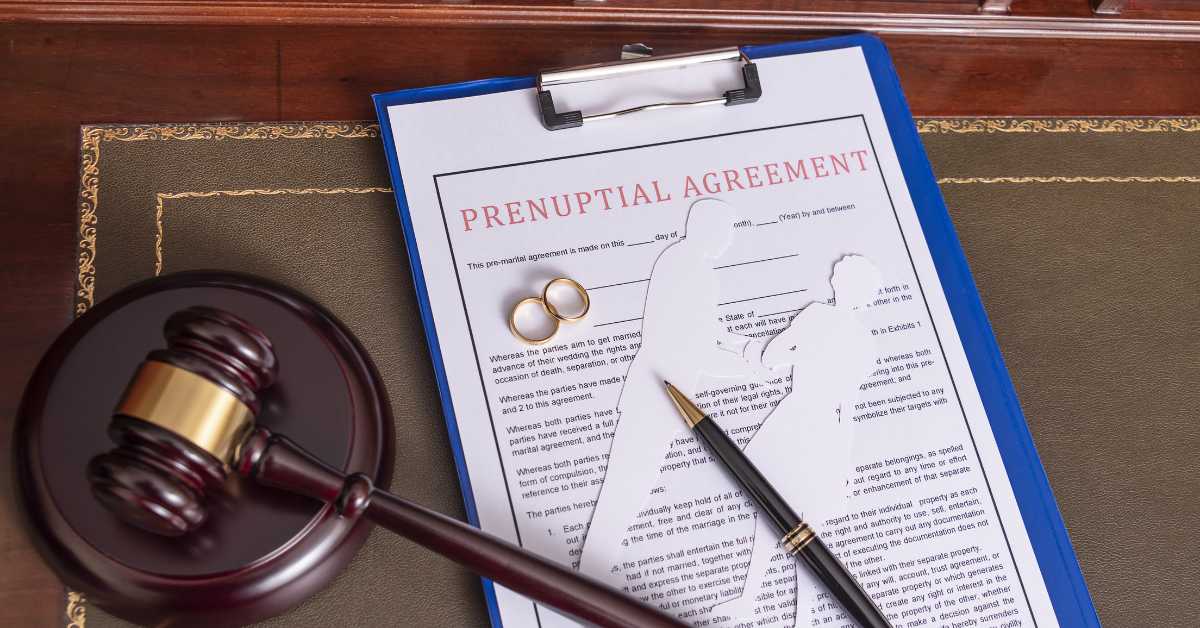
You may be planning a wedding, buying a home together, or getting ready for military orders that could move your family again. Then someone brings up a prenup, and the conversation gets tense. In Virginia, a prenuptial agreement can be a planning tool, not a prediction that your marriage will fail.
Virginia’s Premarital Agreement Act, found at Virginia Code §§ 20-147 through 20-155, sets the basic rules. A valid prenup can protect separate property, address certain debts, and clarify spousal support terms. It cannot override Virginia’s child support laws or let parents bargain away what a court must decide in a child’s best interests.
What Makes a Prenup Valid in Virginia
Under Virginia Code § 20-149, a prenup must be in writing, and signed by both parties, and it becomes effective only if you actually marry. The statute also says it is enforceable without consideration. In plain English, that means you do not have to trade money or property just to make the agreement binding.
That simple rule does not mean every signed document will hold up. Under Virginia Code § 20-151, a court can refuse to enforce a prenup if the person challenging it proves they did not sign voluntarily or proves the agreement was unconscionable when signed and there was not fair and reasonable financial disclosure before execution. Unconscionable means the deal was so one-sided and unfair, in context, that the court may refuse to enforce it.
Timing matters. If you hand your fiancé a complicated agreement a few days before the wedding, after deposits are paid and family has arrived, you create an avoidable problem. A prenuptial agreement lawyer in Virginia will usually want both sides to have time to review drafts, exchange financial information, and make changes before deadlines and pressure take over.
What a Virginia Prenup Can Protect
Under Virginia Code § 20-150, you can contract about rights and obligations in property, the right to manage or transfer property, how property will be handled at separation or divorce, spousal support, wills or trusts that carry out the agreement, life insurance benefits, and other matters that do not violate public policy or criminal law.
That means a prenup may protect a business you built before the marriage, a family inheritance you expect to receive, retirement assets you want clearly identified, or a house you owned before the wedding. It can also address debt by stating who remains responsible for student loans, credit card balances, or business liabilities brought into the marriage.
Here is a common Hampton Roads example. You own a townhouse in Newport News before the wedding, and your future spouse serves in the Navy. A carefully written prenup can say the house stays your separate property, define what happens if marital money later pays the mortgage, and explain how appreciation will be treated. Without that kind of planning, Virginia’s equitable distribution rules under § 20-107.3 may control the result in a future divorce.
If you want a broader look at how property and divorce issues intersect, start here: https://www.attorneyholcomb.com/divorce-lawyer/.
What a Prenup Cannot Do
A prenup is powerful, but it is not unlimited. The biggest misunderstanding involves children. You should not rely on a premarital agreement to lock in future custody schedules or to waive child support. Virginia courts must decide custody based on the child’s best interests under §§ 20-124.2 and 20-124.3, and child support is governed by the guideline framework in § 20-108.2. Because those duties belong to the court and are tied to the child’s rights and present circumstances, a clause trying to strip away support or bind the court on custody is vulnerable and may not be enforced.
A prenup also cannot require something illegal or against public policy. Virginia Code § 20-150 lets couples contract on many subjects, but not on matters that violate public policy or impose a criminal penalty. So an agreement cannot punish a spouse for reporting abuse, force someone to stay married, or depend on criminal conduct.
You also cannot assume vague wording will save a sloppy document. Phrases like “everything stays separate” sound clear until you ask what happens to income earned during the marriage, joint accounts, mortgage paydown, stock grants, or improvements to a premarital home. Short online templates often miss the details that drive real disputes later. Holcomb Law addresses common myths here: https://www.attorneyholcomb.com/truth-prenuptial-agreement/.
How Virginia Courts Look at Enforceability
When a Virginia court reviews a prenup, the dispute often centers on process as much as content. Judges look at whether each person signed voluntarily, whether there was fair disclosure of assets and debts, whether any waiver of more disclosure was express and in writing, and whether the agreement was unconscionable when executed under § 20-151. That means the paper trail matters. Draft history matters. Timing matters too.
Think about a realistic example. A physician in Virginia Beach and an entrepreneur in Hampton plan to marry in six weeks. They exchange balance sheets, tax returns, business records, and drafts through separate lawyers. They revise the spousal support language, sign two weeks before the wedding, and keep a final version with clean exhibits. That process gives the agreement a much stronger foundation.
Now compare that with a rushed weekend signing after a threat that the wedding will be canceled if the document is not signed immediately. Even if the final text looks polished, the surrounding facts can create a serious challenge. A good prenup attorney in Newport News or Virginia Beach does more than write clauses. The lawyer helps build a record that shows fairness, disclosure, and voluntary decision-making.
Virginia law also lets spouses amend or revoke a prenup after marriage, but only through a written agreement signed by both parties under § 20-153. If the wedding date is too close for careful drafting, it may make more sense to discuss a marital agreement under § 20-155 instead of forcing a bad prenup.
Why Military Couples in Hampton Roads Often Consider Prenups
Prenups come up often for military families in Newport News, Hampton, and Virginia Beach because Hampton Roads is full of circumstances that make financial planning harder. PCS moves, deployment, housing issues, prior marriages, and children from earlier relationships all create moving parts. Families connected to Fort Eustis, Langley Air Force Base, and NAS Oceana often want more certainty than a generic online form can provide.
That is especially true when one spouse is bringing a premarital house, separate savings, or family support into a marriage that may involve several moves in a few years.
A prenup can help identify what each spouse is bringing into the marriage and how later changes should be treated. You may want to protect a premarital home while one spouse relocates, define who carries responsibility for premarital debt, or coordinate a future inheritance plan for children from a prior relationship. If one spouse expects career interruptions because of military moves, the agreement may also address spousal support in a way that reflects that reality.
What a prenup cannot do is erase every military-divorce issue. If a marriage later ends, federal rules, military retirement questions, and Virginia divorce law may all matter. A prenup is one part of the plan, not the whole plan.
Where Prenup Questions and Disputes Show Up in Hampton Roads
Most prenup disputes surface during a divorce or another domestic relations case, which means they usually end up in circuit court. In this region, that can include the Newport News Circuit Court, the Hampton Circuit Court, or the Virginia Beach Circuit Court, depending on where the case is filed. Circuit courts handle divorce and equitable distribution matters, so they are often the courts that address whether a prenup controls property division or spousal support.
Related family issues may travel through the local Juvenile and Domestic Relations District Courts as well. In Hampton Roads, that can include the Newport News Juvenile and Domestic Relations District Court, Hampton Juvenile and Domestic Relations District Court, and Virginia Beach Juvenile and Domestic Relations District Court for matters such as custody, support, or family-abuse proceedings. Court locations and procedures can be checked through https://www.vacourts.gov, and the current statutory text can be checked through https://law.lis.virginia.gov.
That distinction matters because a prenup may control certain financial issues while the court still decides support, custody, or other questions under separate statutes.
When to Talk With a Prenuptial Agreement Lawyer in Virginia
The best time to talk with a lawyer is well before the invitations go out, not after the seating chart is finished. Early advice gives you room to identify goals, gather financial records, and decide whether a prenup, a later marital agreement, or no agreement at all, makes the most sense. It also lowers the risk that one side later claims pressure, surprise, or incomplete disclosure.
You should seriously consider legal advice if you own a business, expect an inheritance, have substantial debt, own real estate before marriage, receive military pay or benefits, or want to protect children from a prior relationship. Those facts do not mean you must sign a prenup. They mean you should get informed before you choose.
If you are comparing lawyers, ask how they handle disclosure, timing, revisions, and signing logistics. You can review attorney licensing information through the Virginia State Bar at https://www.vsb.org. For another look at timing, read https://www.attorneyholcomb.com/when-should-you-consider-a-prenup-in-virginia/.
Frequently Asked Questions
Do both of us need our own lawyer for a Virginia prenup?
Virginia law does not say each person must have separate counsel for a prenup to exist. Still, separate lawyers often make the agreement much stronger. Independent advice helps show that each of you understood the terms, had a chance to ask questions, and signed voluntarily.
How far before the wedding should we sign a prenup in Virginia?
There is no magic number in the statute, but earlier is better. You want enough time to exchange financial information, negotiate changes, and review the final version without last-minute pressure. Waiting until the week of the wedding can create facts that make enforceability harder to defend later.
Can a Virginia prenup protect me from my future spouse’s debt?
It can often help, especially if it clearly identifies premarital debts and states who remains responsible for them. It can also explain whether marital income will be used to pay those debts and whether reimbursement is owed if that happens. The more specific the agreement is, the less room there is for later disputes.
Can we waive alimony in a Virginia prenup?
Virginia law allows premarital agreements to address spousal support under § 20-150. Whether a specific waiver will hold up depends on the wording, the disclosure process, and the surrounding facts at the time of signing and enforcement.
What if we already got married and never signed a prenup?
You may still be able to enter a marital agreement after the wedding. Under § 20-155, married spouses can make agreements about their rights and obligations, and under § 20-153, a premarital agreement can be amended or revoked in a signed writing after marriage. The right option depends on what you are trying to protect and where you are in the marriage.
If you’re dealing with questions about a prenuptial agreement, the attorneys at Holcomb Law are ready to help. We handle family law cases across Newport News, Hampton, Virginia Beach, and Lynchburg — and we understand how much is at stake for you and your family. Call us or contact us online at https://www.attorneyholcomb.com/contact/ to schedule a consultation.