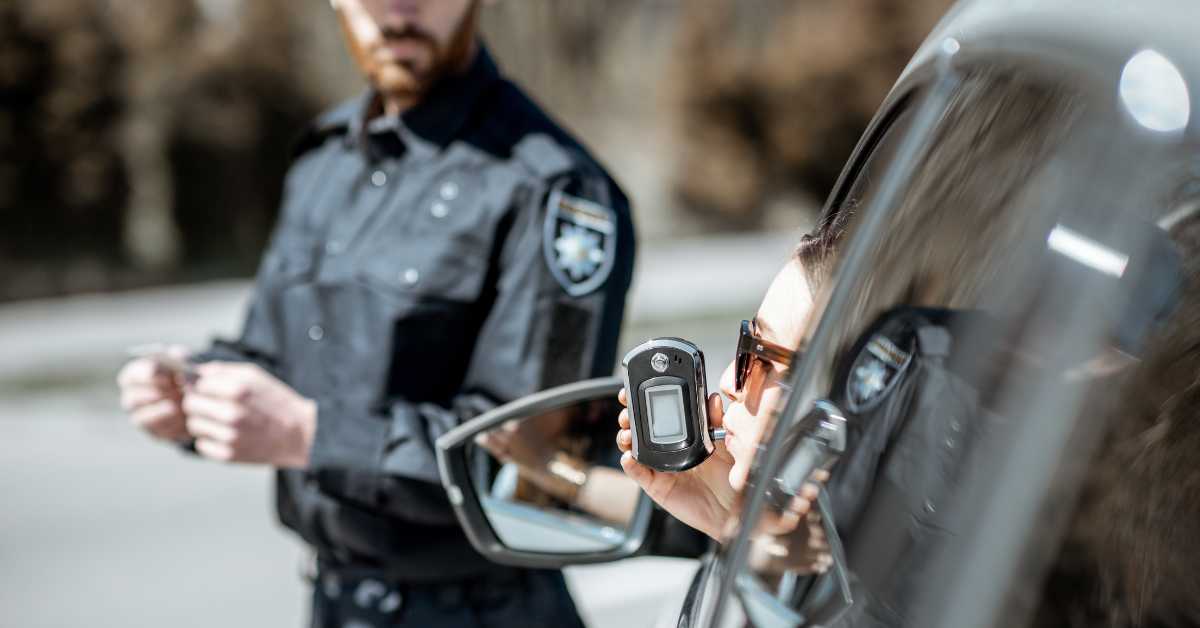
You are on I-64 heading home from a friend’s place in Denbigh. Blue lights come on behind you. Fifteen minutes later you are sitting in the back of a cruiser outside the Newport News police station, and an officer is reading you a form and asking you to blow into a machine. Your gut says do not give them anything.
That instinct is understandable, and in Virginia it carries a specific, immediate price. The moment you got on the road, state law counted you as having already agreed to that test. What happens next is written into the Code of Virginia, and a change that took effect on July 1, 2026, altered one of the most practical parts of it.
Virginia’s implied consent law, in plain terms
Under Virginia Code § 18.2-268.2, anyone who drives on a highway in the Commonwealth has, by the act of driving, consented to give a breath or blood sample if they are arrested for DUI. You did not sign anything. Driving was the agreement.
Two limits matter. The arrest has to happen within three hours of the alleged offense. And it applies to operation on a highway, which is a defined term under § 46.2-100 and broader than most people assume.
If the arrest is for alcohol, you take a breath test. If breath testing is unavailable or you physically cannot do it, a blood draw substitutes. If the officer has reasonable cause to think drugs are involved, blood testing can be required on top of the breath test.
The roadside test and the station test are not the same test
This trips up more people than anything else in Virginia DUI law, and getting it wrong at the roadside costs drivers their licenses every week.
The small handheld device an officer offers you on the shoulder of the road, before any arrest, is a preliminary breath test. It is governed by Virginia Code § 18.2-267, and the statute gives you an explicit right to say no. Your refusal of that device cannot be used as evidence in your prosecution. The result cannot come into evidence at trial either. It exists to help the officer decide whether to arrest you.
The officer is supposed to advise you of that right before offering it. A 2024 amendment added teeth: if the officer skips the advisement, the Commonwealth cannot use that sample in a probable cause suppression hearing.
The evidentiary test is different. It happens after arrest, on calibrated equipment, usually at the station or a magistrate’s office. That is the test implied consent covers. Refusing it is a chargeable offense.
So the honest answer to “Can I refuse” depends entirely on which machine you are looking at and whether handcuffs have come out yet.
What happens in the first hour after you refuse
The officer fills out a sworn advisement form and takes it to a magistrate. Under Virginia Code § 18.2-268.3, that sworn certification is itself probable cause for the magistrate to issue a warrant or summons charging you with unreasonable refusal. You now have two cases instead of one.
Your license is also gone before you leave the building. Under § 46.2-391.2, a refusal triggers an immediate administrative suspension: seven days on a first offense, 60 days on a second, and running until your trial date on a third or subsequent. No judge is involved in that. It is automatic.
The penalties, broken out
Virginia splits refusal into breath and blood, and they are not treated the same.
Refusing the breath test. A first refusal is a civil offense. No jail, no criminal conviction, but the court suspends your driving privilege for one year, and that year runs on top of the administrative suspension. If you have a prior refusal finding or a prior DUI conviction within the past 10 years, a second breath refusal becomes a Class 1 misdemeanor. That carries up to 12 months in jail, a fine of up to $2,500, and a three-year revocation.
Refusing the blood test. Under subsection B, blood refusal stays civil at every level. The first offense is a one-year suspension. A repeat within 10 years is a three-year revocation, but it does not become a misdemeanor.
Every one of those suspension periods is in addition to whatever the court does on the underlying DUI. They do not run at the same time. For the DUI side of the ledger, see our breakdown of DUI penalties in Virginia and what changes on a second or third offense.
What changed on July 1, 2026
HB561, enacted as Chapter 1112 of the 2026 Acts of Assembly, rewrote parts of § 18.2-268.3 and several related sections. Two changes matter to anyone charged with refusal right now.
You no longer wait 30 days to ask for a restricted license. Under the prior version, a first-offense refusal defendant had to sit out 30 days after conviction before petitioning. That waiting period is gone. You can ask the court at conviction. Granting it is still discretionary and still requires good cause, and the restricted license comes with conditions: a certified ignition interlock on each vehicle you own or that is registered to you and enrollment in a Virginia Alcohol Safety Action Program. It never covers a commercial vehicle.
Time on the interlock before trial now counts. New statutory language lets someone charged with refusal enter an alcohol safety action program before trial, pre-qualify for interlock installation, and have that installation time credited against whatever interlock or restricted license period a court later orders. For a driver who knows the outcome is unlikely to be good, that changes the math on waiting.
A related amendment to § 46.2-391.2 also lets a driver charged with a second offense petition the general district court for a restricted license and interlock during the 60-day administrative suspension.
Does refusing actually help you beat the DUI?
This is the real question underneath every search for “should you refuse a breathalyzer,” and the answer is more complicated than the internet usually admits.
Refusing does remove a number. Without a breath or blood result, the Commonwealth loses the rebuttable presumption under § 18.2-269 that a 0.08 or higher means you were under the influence. That is not nothing.
But it does not leave prosecutors empty-handed. They can still prove impairment through the officer’s observations, your performance on field sobriety tests, dash and body camera footage, what you said, and how you drove. Newport News and Hampton officers testify in these cases constantly, and juries convict on observational evidence.
There is also a common misconception worth correcting. Virginia Code § 18.2-268.10 says your failure to give a sample is not evidence and shall not be commented on by the Commonwealth at trial, except in rebuttal. If a court has made a finding of unreasonable refusal, that finding can be admitted for one purpose only, which is to explain the absence of a test result. The statute then says directly that when admitted this way, it is not to be considered evidence of your guilt.
Refusal is not a confession under Virginia law. It is also not a shield. It is a trade, and whether it was a good one depends on facts nobody can assess from a search result.
Defenses that come up in Hampton Roads courtrooms
The statute punishes unreasonable refusal, and that word does real work.
Was the refusal reasonable? A driver with a medical condition affecting breathing, a genuine inability to understand the advisement, or an officer who gave contradictory instructions may have a reasonable basis. This is fact-specific, and it is litigated.
Was the arrest lawful? Implied consent only attaches after a valid arrest for DUI. If the stop lacked reasonable suspicion or the arrest lacked probable cause, the foundation for the refusal charge is in question.
Was the three-hour window met? § 18.2-268.2 requires arrest within three hours of the alleged offense. In accident cases where the driver leaves the scene or goes to Riverside or Sentara for treatment, that timeline is worth checking closely.
Was the advisement form read correctly? The officer must read the required advisement and certify it under oath. Defects in that process are a live issue.
Was there a resolution that moots the refusal? Under § 18.2-268.4(C), if a defendant pleads guilty to the underlying DUI, the court may dismiss the refusal warrant or summons. Whether that is the right move depends on the whole case, but it is a real option that gets used.
Appeal. Even though a first refusal is civil, it is tried like a misdemeanor. On appeal to circuit court, either party can request a jury, and the Commonwealth has to prove its case beyond a reasonable doubt. More on approach in DUI charge defenses.
A worked example
Consider a hypothetical. A driver is stopped on Jefferson Avenue in Newport News at 1:20 a.m. He declines the handheld device at the roadside, which is his right and which cannot be held against him. The officer arrests him anyway based on the smell of alcohol and unsteady balance. At the station at 2:05 a.m., he is read the implied consent advisement and declines the breath test.
He now faces two charges in Newport News General District Court. His license is suspended for seven days starting immediately. If convicted of refusal, he loses his license for a year on top of the one-year suspension a first DUI conviction carries. He can petition the court for a restricted license at conviction under the July 2026 amendment, with interlock and VASAP conditions attached. The Commonwealth will try the DUI on the officer’s testimony and the cruiser video, without a BAC number, and cannot argue to the judge that his refusal shows he knew he was impaired.
Same driver, same night, different decision at the station, and the case looks nothing alike. This scenario is illustrative only and is not based on an actual client matter.
Military members and CDL holders have more at stake
The Peninsula and Southside carry one of the largest active-duty populations in the country. Joint Base Langley-Eustis, Naval Station Norfolk, NAS Oceana, Naval Weapons Station Yorktown, and Coast Guard Training Center Yorktown all put service members on these roads nightly.
A refusal charge can trigger base driving privilege revocation, command notification, adverse administrative action, and security clearance review, and those consequences move on their own timeline regardless of what a state court does. Our page on military DUI charges in Virginia covers that overlap.
Commercial drivers face a separate problem. Nothing in § 18.2-268.3 permits a court to reduce or modify a CDL disqualification, and no restricted license issued under the section covers a commercial vehicle. For a driver running the I-64 corridor or working out of the Port of Virginia, a refusal can end a career even where the DUI itself does not stick. The knock-on effects to your record are covered in our guide to the Virginia driver’s license point system.
Where your case will be heard
Refusal is tried in the same court as the underlying DUI, per § 18.2-268.4(A). On the Peninsula and Southside that generally means:
- Newport News General District Court, 2500 Washington Avenue, 2nd Floor
- Hampton General District Court, 236 North King Street
- Virginia Beach General District Court, 2425 Nimmo Parkway
- York County and Poquoson General District Court, 300 Ballard Street, Yorktown
Appeals from any of these go to the corresponding circuit court and are heard de novo, meaning the case starts over. Court schedules and contact information are available through the Virginia Judicial System.
Getting help
If you have already refused, the clock is running. The administrative suspension started at the magistrate’s office, the criminal or civil summons has a return date, and evidence like body camera footage and calibration records does not preserve itself. Whether the refusal was reasonable, whether the arrest was valid, and whether a restricted license is realistic are all questions worth asking early. Start with our Virginia DUI lawyer page, or read more on the difference between DWI, DUI, and DUID in Virginia.
Frequently Asked Questions
Can you refuse a breathalyzer in Virginia?
You can physically refuse, but Virginia treats it as a violation. Two different tests are involved. The roadside preliminary breath test is optional under Virginia Code § 18.2-267, and turning it down cannot be used against you at trial. The post-arrest breath test is the one covered by implied consent under § 18.2-268.2. Unreasonably refusing that test is a separate charge under § 18.2-268.3, and a first refusal costs you your license for a year.
Should you refuse a breathalyzer if you are pulled over in Virginia?
There is no answer that fits every stop, and anyone who tells you otherwise is guessing about facts they have not seen. Refusing the post-arrest test removes a BAC number from the Commonwealth’s evidence, but it adds a separate refusal charge and a one-year suspension that runs on top of any DUI penalty. Prosecutors can still prove impairment through officer observations, field sobriety results, and dash or body camera video. Talk to a lawyer about your specific stop before assuming refusal helped or hurt you.
If you register a 0.08 or refuse the BAC test in Virginia, what happens to your license right away?
Your license is suspended immediately at the magistrate’s office. Under Virginia Code § 46.2-391.2, that administrative suspension lasts seven days for a first offense, 60 days for a second offense, and until your trial date for a third or subsequent offense. This happens before any judge hears your case and is separate from any suspension a court imposes later.
Does refusing a breath test count as proof you were drunk in Virginia?
No. Virginia Code § 18.2-268.10 says your failure to give a sample is not evidence and the Commonwealth generally cannot comment on it at your DUI trial. If a court makes a finding of unreasonable refusal, that finding can be admitted for one narrow reason only, which is to explain why no test result exists. The statute states plainly that it is not to be considered evidence of guilt.
Can you get a restricted license after a first refusal in Virginia?
You can ask for one. A first refusal carries a one-year suspension, and the court has discretion to grant a restricted license for good cause. Legislation effective July 1, 2026, removed the requirement that you wait 30 days after conviction before filing the petition. If the court grants it, expect conditions including a certified ignition interlock on vehicles you own or that are registered to you and enrollment in a Virginia Alcohol Safety Action Program. A restricted license never covers a commercial vehicle.
If you are facing a breathalyzer or blood test refusal charge, the attorneys at Holcomb Law are ready to help. We handle DUI and criminal defense cases across Newport News, Hampton, Virginia Beach, Yorktown, and Lynchburg, and we understand how much is at stake for you and your family. Call (757) 913-5204 or contact us online to schedule a consultation.
Wayne E. Holcomb, Esq. | Holcomb Law, P.C. | Licensed in Virginia
This content is for informational purposes only and does not constitute legal advice. Reading this article does not create an attorney-client relationship. This page may be considered attorney advertising under Virginia Rules of Professional Conduct 7.1 through 7.5.